
Nutrition is the foundation of life. Every living organism, especially humans, depends on proper nutrition to grow, develop, and stay healthy. Good nutrition provides the body with energy, builds strong immunity, repairs cells, and keeps organs functioning properly.
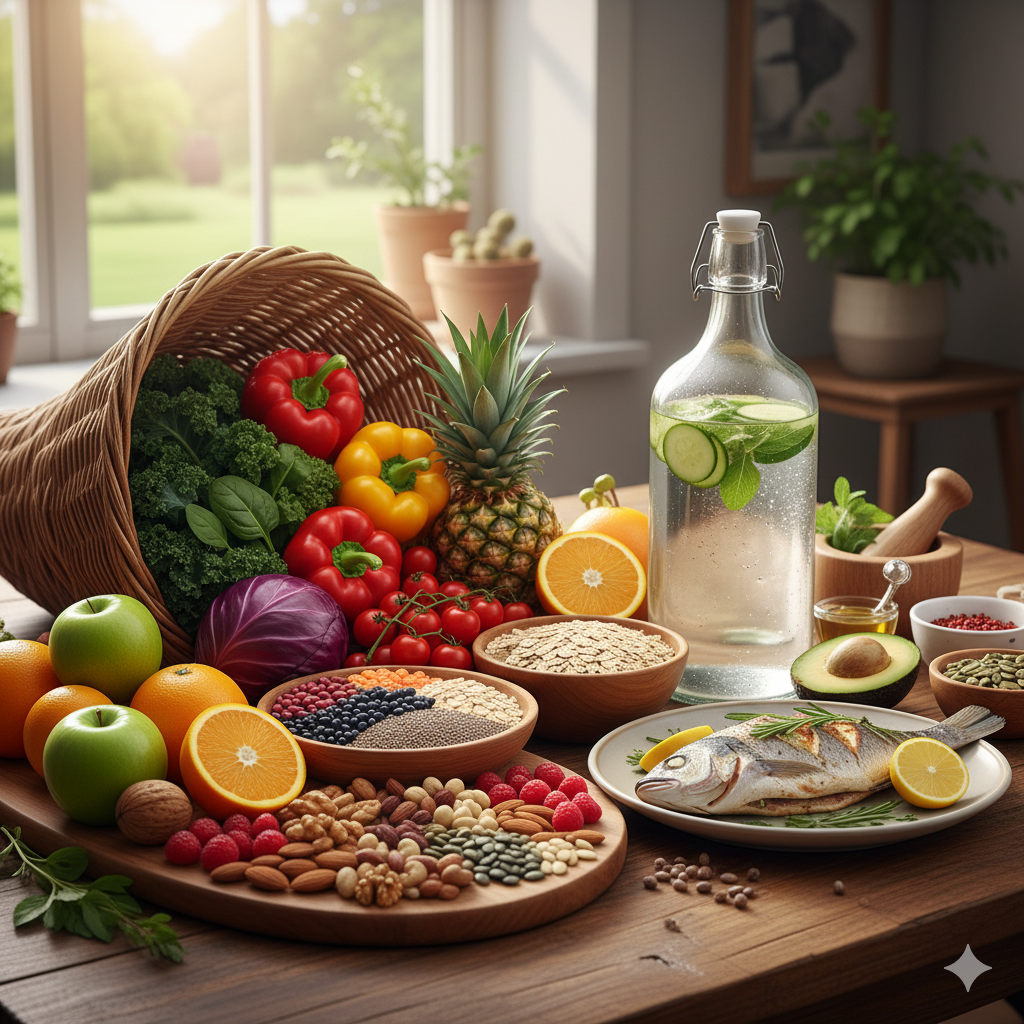
Table of Contents
There are six essential nutrients we all need:
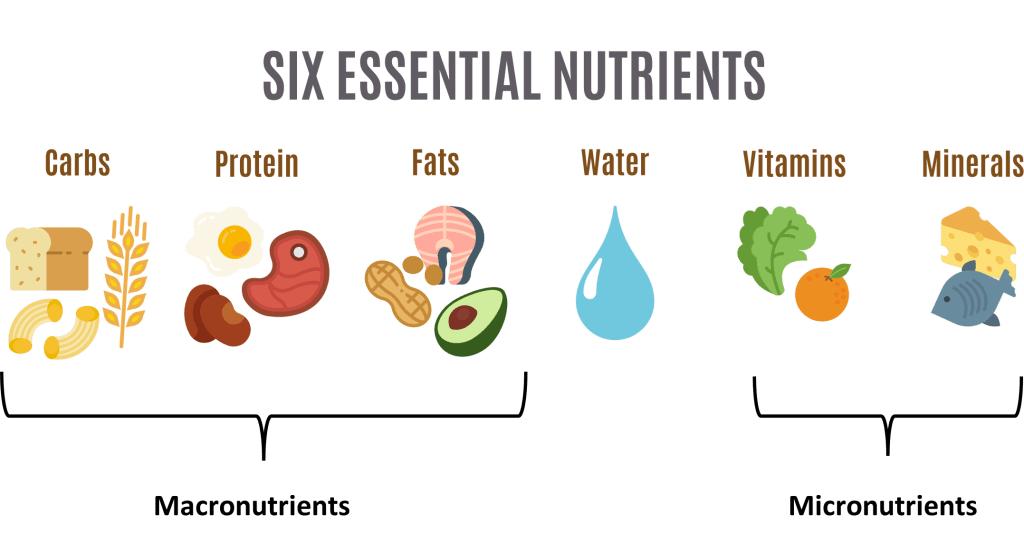
Carbohydrates – Carbs, short for carbohydrates, are one of the main nutrients our body needs for energy. They are like the fuel that helps us walk, run, think, and even breathe. Found in Rice, Wheat, potato, Quinoa, Beans, Oats, Pasta )
Proteins – Protein is called the building block of life because it helps, build and repair body tissues. Found in Chicken, Buff, Fish, Eggs.
Fats – Fat is fuel and protection for the body. Found in Ghee, Avocado, Dairy cheese, Nuts, Olive oil, Fish oil.
Vitamins –are nutrients that our body needs in small amounts to stay healthy and work properly. They don’t give energy like carbs or fats, but they help the body grow, fight diseases, and perform important functions. found in mix of colorful fruits, vegetables, grains, dairy, and proteins.
Minerals – Strengthen our bones, teeth, and blood.( variety of fruits, vegetables, whole grains, nuts, dairy, meat, or plant-based proteins )
Water – Keeps us alive, fresh, and active.
A healthy mix of these nutrients is the secret to a long and active life.
Good nutrition is like fuel for our body. Just like a car cannot run without petrol or electricity, our body cannot work without proper food. When we eat healthy meals, our brain thinks better, our muscles get stronger, and our body feels full of energy. But when we ignore nutrition and eat only junk food, our body becomes weak, tired, and sick over time.
Nutritions for children’s health
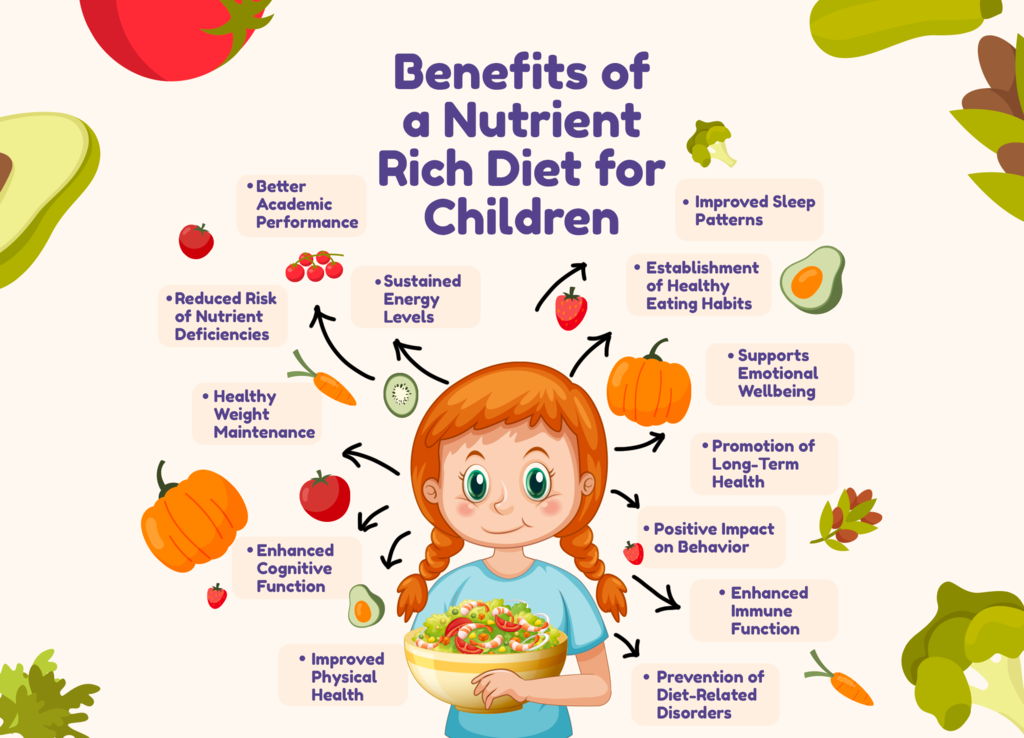
Children need the best nutrition because they are growing every single day. Their bones, brain, and muscles are still developing. If children eat healthy food full of nutrients, they will:
- Grow taller and stronger.
- Learn faster at school because nutrition supports brain health.
- Have strong immunity to fight off common sickness like cough and cold.
- Develop healthy habits that last a lifetime.
On the other hand, if children don’t get proper nutrition, they may face problems like weak bones, slow growth, low energy, and even difficulty in learning. That is why parents should give kids a balanced diet of fruits, vegetables, milk, whole grains, and protein foods like eggs, beans, and fish.
Nutrition for Women’s Health
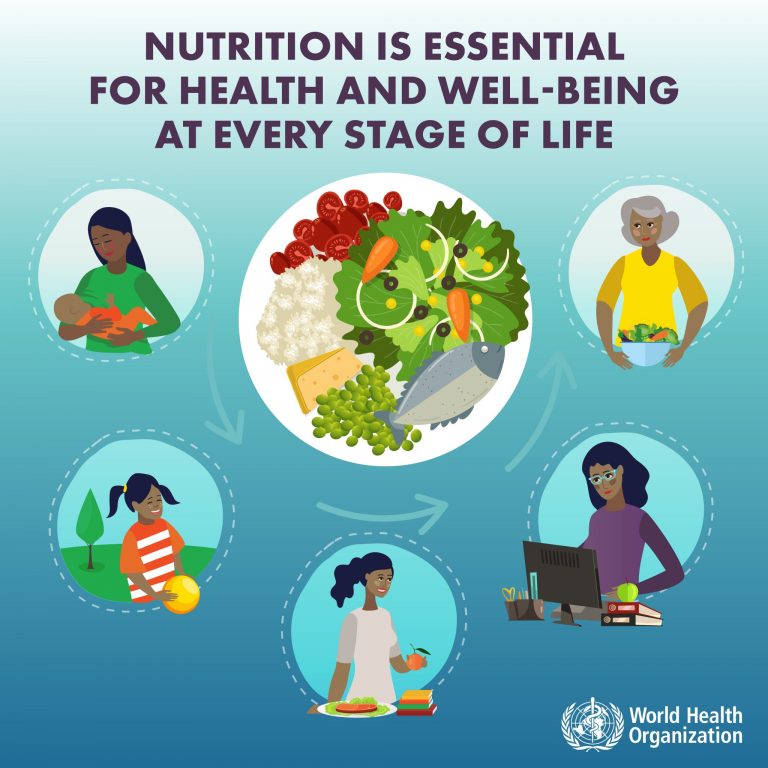
Women’s health needs special care because women go through many changes in life, such as puberty, pregnancy, and menopause. It supports them at every stage.
- During teenage years, girls need iron and calcium for strong bones and healthy blood.
- During pregnancy, women need extra nutrients like folic acid, protein, and vitamins to keep both mother and baby healthy.
- In adulthood, women need a balanced diet to keep their heart, skin, and hormones healthy.
Lack of proper nutrition in women can lead to problems like anemia (low blood), weak bones, tiredness, and complications during pregnancy. That is why women should eat iron-rich foods (like leafy greens and beans), calcium-rich foods (like milk and cheese), and lean proteins daily.
Nutrition for Men’s Health

Just like women, men also need good nutrition for energy, strength, and overall wellness. For men, It plays a big role in:
- Building muscles and staying active.
- Keeping the heart healthy.
- Supporting brain function and reducing stress.
- Preventing diseases like diabetes, high blood pressure, and obesity.
Men who eat balanced meals with proteins (like fish, chicken, and legumes), healthy fats (like nuts and seeds), and plenty of vegetables are likely to stay stronger for longer. Skipping proper nutrition may lead to tiredness, loss of muscle, and poor health over time.
How to Balance Your Nutrition?
Balancing your nutrition is one of the most powerful steps you can take toward a healthier lifestyle. A well-balanced diet ensures your body receives the right amount of macronutrients (carbohydrates, proteins, and fats) and micronutrients (vitamins and minerals) it needs to function properly. Instead of focusing on restrictions, the key lies in variety, moderation, and portion control.
Start by filling half your plate with fruits and vegetables. These are rich in fiber, vitamins, and antioxidants that protect your body and improve digestion. One-quarter of your plate should include lean proteins such as chicken, fish, beans, eggs, or nuts, which help repair tissues and support muscle growth. The remaining quarter should consist of whole grains like brown rice, oats, or quinoa, providing long-lasting energy. Healthy fats, such as olive oil, avocado, and seeds, should also be included in moderation to support brain and heart health.
Hydration is another crucial part. Drinking enough water throughout the day improves metabolism, maintains energy levels, and aids nutrient absorption. Cutting down on sugary drinks and processed foods is equally important, as these add empty calories and can harm long-term health.
A practical way to balance nutrition is by following the “80/20 rule”—eat nutrient-dense, wholesome foods 80% of the time and allow yourself occasional treats 20% of the time. This approach makes healthy eating sustainable without feeling deprived.
Finally, remember that balanced nutrition looks different for everyone. Age, activity level, and health conditions all play a role in determining your unique needs. Listening to your body, planning meals in advance, and consulting a nutritionist if necessary can help you achieve long-term success.
Balanced food is not about dieting or starving; it’s about making smart food choices every day.
Final Thoughts
Nutrition is the foundation of a healthy and happy life. It is not just for children, women, or men — it is important for everyone. Eating balanced food gives us energy, strength, and protection from diseases. Whether you are a parent, a student, a worker, or an athlete, it supports you as your best friend.
If you want a longer, stronger, and healthier life, start by asking yourself one simple question every day: “Am I giving my body the right nutrition?”
Also remember that good
Remember: Healthy food today means a better tomorrow.
Also read: Fitness can be achieved by all.
Leave a Reply